
Every gambler eventually has that moment: a slot machine pays out three hundred times your stake on a spin you almost skipped, or you lose a poker hand you played perfectly because the river card was a two-outer. In that instant, the line between luck and skill feels razor thin. But the truth is far more interesting, and understanding it changes how you approach every game you play.
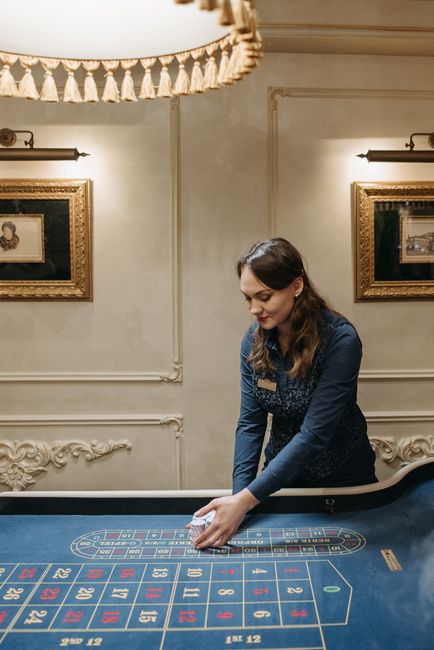
iGaming covers an enormous spectrum. On one end you have pure chance games like roulette and most slot machines, where your decisions barely move the needle. On the other end sits poker, where a skilled player can beat a weaker one over thousands of hands. Most games fall somewhere in between. Knowing where each one sits is the difference between playing with a plan and just donating money to the house.
Where Slot Machines Really Stand
Modern video slots are built on random number generators, or RNGs, that cycle through thousands of outcomes per second. When you hit spin, the machine doesn't think about your previous results, your bet size, or how long you've been sitting there. It simply grabs whatever number the generator lands on at that microsecond. That's why chasing a "due" jackpot is a losing mindset, no matter how convincing the pattern looks on screen. We found king 88 to be a handy reference here.
That doesn't mean slot play is entirely without strategy. It means the strategy lives in the choices you make before and around the spin, not during it:
- Choose your volatility. Low-volatility slots pay smaller amounts more often, stretching your bankroll. High-volatility slots like Book of Dead or Gates of Olympus can go fifty spins without a win, then pay a thousand times your stake. Match the game to your tolerance, not your mood.
- Check the RTP. A slot listed at 96.5% returns more to players over time than one at 94%. On a 500-spin session at 1 euro per spin, that gap is worth real money.
- Use bonuses wisely. A 100% match bonus with a 40x wagering requirement means you need to bet a lot before withdrawing. Read the terms, because the bonus is only valuable if you can realistically clear it.
- Set a stop-loss. Decide before you start that you'll walk away at a certain loss. This is the single most effective skill you can apply to a pure chance game.
None of these tips change the house edge. They change how long your money lasts and how much you enjoy the session, which is the only outcome you can actually control.
Blackjack and the Illusion of Mastery
Blackjack sits in a strange middle ground. Basic strategy, the mathematically optimal way to play every hand, can cut the house edge to around 0.5%, far better than most casino games. Count cards well enough and you can flip the edge in your favour. But that edge only shows up across tens of thousands of hands, and casinos watch for counters aggressively.
For the average player, basic strategy is the real win. It feels unintuitive at first, hitting on a soft 18 against a dealer's nine, for example, but the math is not debatable. Memorise a basic strategy chart and you'll lose less than almost everyone else at the table. Side bets like Perfect Pairs or 21+3 look tempting but usually carry a house edge of 5% or more, so skip them.
Why Poker Is the Skill Game in the Room
Poker is the outlier. It's the one game in the casino where a consistently good player can earn money over the long run, because you're not playing against the house, you're playing against the other people at the table. The rake is the cost of doing business, but it's a fixed tax on the pot, not a built-in mathematical disadvantage like the roulette wheel's two green zeros.
Skill shows up in identifiable ways. A solid player folds marginal hands from early position, reads betting patterns, adjusts to table dynamics, and understands pot odds. A beginner calls too much with weak hands because they've already put money in, a trap known as the sunk cost fallacy. Over thousands of hands, those small leaks compound into losses that no amount of luck can offset.
If you're serious about the skill side of iGaming, poker is where to invest your study time. Learn hand ranges, work on position, review your sessions. A 10% improvement in decision quality beats any lucky streak you'll ever ride.
The Mental Game That Separates Players
Here's something that applies across every game, from slots to sports betting to poker cash tables: bankroll management and emotional control matter more than any single strategy.
Tilt is the gambler's worst enemy. It's the urge to chase losses, double your stake, or play a hand you know you should fold. Tilt has bankrupted more players than bad beats ever have. Stay disciplined and treat your bankroll as a tool, not a scoreboard. Bet 1-2% of your total bankroll per session and the variance won't wipe you out during a rough stretch.
Sports betting adds another layer, since it rewards information rather than pure probability. Sharp bettors follow injury reports, line movement, and advanced statistics. But even the sharpest handicapper wins only around 55% of spread bets. That's enough to be profitable, and it shows how marginal the edge really is at the top level.
So Is iGaming Luck or Skill?
The honest answer is both, weighted differently depending on the game. Roulette, keno, and most slots are overwhelmingly luck. Blackjack involves real but limited strategy. Poker and sports betting tip toward skill, provided you put in the study time and manage your emotions.
What matters most isn't whether a game is theoretically beatable. It's whether you understand which side of the spectrum you're on and act accordingly. Don't apply poker thinking to a slot session, and don't rely on luck at a poker table. The players who last and actually enjoy iGaming are the ones who respect the maths, manage their money, and know exactly what kind of game they're playing before the first bet is placed.


Zhon Andarson
Coding is used in almost all aspects of life and work now, be it directly or indirectly. It’s not just for companies in the tech sector. “An increasing number of businesses rely on computer code,
Andro Smith Doe
Coding is used in almost all aspects of life and work now, be it directly or indirectly. It’s not just for companies in the tech sector. “An increasing number of businesses rely on computer code,